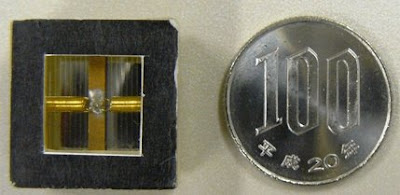
3D Solar Cell with Improved Efficiency By 80 Percent
Men of science at the United States of America section of Energy’s Oak Ridge National Laboratory have produced a 3D photovoltaic cell which could rise PV light-to-energy conversion rates by 80%. Generally, when sunlight hits the surface of a solar board and is assimilated by solar cells, a few of the charge produced by solar photons gets pinned by natural faults in the bulk materials that comprise the strata of the PV cell, consequent in a deprivation of final electricity output. The scientists focused on optimising this energy. "To solve the entrapment problems that reduce solar cell efficiency, we created a nanocone-based solar cell, invented methods to synthesize these cells and demonstrated improved charge collection efficiency," Xu said. Oak Ridge’s 3D solar cell applies zinc-oxide n-type nanocenes to suffice a model for channeling electrons. A p-type ground substance of crystalline Cd telluride functions as the main photon absorber medium. With these new...