Posts

Showing posts with the label radiation

Americans experience most radiation from medical exam scans

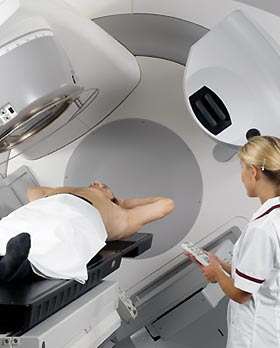
Americans acquire the virtually all medical radiation in the global, even to a higher degree than people in other productive countries. The United States scores for half of the modernest operations that use radiation, and the normal American's dose has matured six times across the last couple of 10s. Excessively exposure to medical radioactivity elevates the risk of cancer. That risk is growing because folks in day-after-day positions are getting imaging tests far too often. Imaging scan is one of the basic and insidious. CT scans — "super X-rays" that give fast, exceedingly elaborated images — have soared engaged across the last 10 years, frequently substituting tests that do not call for radiation, such as ultrasound and MRI, or MRI. Radiation sickness is a shrouded danger — you do not experience it once you get it, and any harm commonly does not come out for years. Admitted one by one, exams that use radiation brings petty risk. Across time the dose cumulates. Do...

NASA will restart primate irradiation testing

Image
Recently, NASA foretold the winners of 12 honours for analysing the biologic consequences of radiation. In the top of the list is a $1.75 million project to irradiate eighteen squirrel monkeys in an attempt to determine how space radiation affects the central nervous system. If its accepted, the experimentation it's going to be the first NASA-funded primate project to start after more than 30 years. The experimentation is destined to enquire the effects of solar flares and astronomic cosmic irradiations: both will bombard cosmonauts with burdened particles in heavier numbers once they leave the protective cover of Earth's magnetosphere. Since 2004, the United States has started the big plan of returning the astronauts to the moon, with the ultimate goal of attending Mars. You can find evidence that space irradiation impacts the brain, but it's not very clear the real level of danger it poses to deep-space adventurers. NASA states the new experiment will show what it...

Cell phones and radiation: 10 best and 10 worst

Image
How much radiation does your cell phone emit? This question is always in my mind when I buy a new phone. That's the reason why I use hands-free devices when I talk to someone. It's easy to find out the answer to that question thanks to the Environmental Working Group's new online guide to cell phone emissions . They ranked over 1,000 different cell phones according to radiation levels. So, here is the list: 10 best phones (lowest radiation) Samsung Impression (SGH-a877) Motorola RAZR V8 Samsung SGH-t229 Samsung Rugby (SGH-a837) Samsung Propel Pro (SGH-i627) Samsung Gravity (SGH-t459) T-Mobile Sidekick LG Xenon (GR500) Motorola Karma QA1 Sanyo Katana II 10 worst phones (highest radiation) Motorola MOTO VU204 T-Mobile myTouch 3G Kyocera Jax S1300 Blackberry Curve 8330 Motorola W385 T-Mobile Shadow Motorola C290 Motorola i335 Motorola MOTO VE240 Blackberry Bold 9000 If you find your phone in the second list (highest radiation phones) you should really change it. Here ...

Radiation therapy cuts prostate cancer death

Image
A team of Swedish researchers reported that radiation therapy combined with standard drug treatment can reduce to 50% the death rate from advanced prostate cancer and should become the standard of care globally. The study was made on 800 prostate cancer patients. It showed that 24% of men who got only standard treatment (drugs) had died after 10 years, compared with just under 12% of men who also got radiation treatment. Adding radiation to the usual drug therapy does not add too many side-effects to the human organism, they wrote in the journal Lancet Oncology. "The quality of life and adverse effect profile is acceptable. We therefore suggest that endocrine treatment plus radiotherapy should be the new standard of care for these patients," Anders Widmark of Umea University in Sweden and colleagues wrote. It is a known fact that p rostate cancer is the second-leading cancer killer of men. It kills 221,000 men every year globally, with 679,000 new cases diagnosed. "The ...

Experimental drug may block radiation damage

Image
One dose of the early-stage experimental drug protected mice and monkeys from lethal doses of radiation. Future experiments will be conducted to see if tissues in humans can, likewise, be protected during radiation treatments and as an antidote from nuclear attacks. Andrei V. Gudkov , who is chairperson of Cell Stress Biology within the Roswell Park Cancer Institute (Buffalo, New York, U.S.A.), was the lead researcher in the study. The drug of interest has been named CBLB502, a polypeptide drug derived from Salmonella flagellin. In the past and still today, radiation is a quite useful medical tool in combating diseases such as cancer by destroying cancerous cells. However, the radiation can also adversely affect healthy tissues, bone marrow, the gastrointestinal (GI) tract, and other such areas of the human body. Because of the problems caused to normal cells, the amount and number of radiation treatments must be limited. If this drug proves to be effective at protecting such healthy ...